
How to Find the Perfect Wild Camping Spot: A Beginner’s Guide
Eight tips to get you startedLast updated: October 2026
If you’re looking for tips on how to find a good wild camping spot, the first question is always the same: where do I go? Ask on Facebook and people get really salty about giving locations away, as if they own the hill. The good news is that wild camping spots are dead easy to find yourself.
How to find a good wild camping spot: my 8 tips
Here are my eight tips for finding the perfect wild camping spot, plus what to carry and how to plan your first trip.
Tip 1: Scout locations yourself
Park your car and go for a walk somewhere local to you, or somewhere you’re interested in. Put your backpack on with some weight in it and see how you feel. You’ll get a reasonable idea of the pace you can walk and the weight you can carry.
While you’re out, look for flat ground, shelter and water. Scouting your own spots beats asking people on the internet, and it’s half the fun.

Tip 2: Follow other YouTubers
There are a thousand YouTubers making wild camping videos, and many of them tell you where they are. Some of them even tell you where the toilets are, which is the real gold. Find people who camp in the areas you’re interested in and follow them. They’ll give you locations and even tips on where to park.
Tip 3: Read guidebooks
Books are dead simple and cheap on the second-hand market, on Amazon or eBay. A few I’ve got on the shelf:
- The Wild Guide series, including Lakes & Dales and Central England. They go region by region, and you could do a different place every week for the rest of your life and not run out.
- Hidden Beaches, Wild Swimming and Wild Ruins & Hidden Places. Wild Ruins pointed me to Magpie Mine in the Peak District, which makes an awesome camp where nobody will disturb you, apart from the cattle.
- The Fotovue photographing guides, such as Photographing the Peak District, Wales, Scotland and Snowdonia. They’re more expensive, but they cross the line between photography and wild camping and show you the viewpoints.
- Wild camping books, like Phoebe Smith’s Wilderness Weekends with 26 weekends away. I’ve also got one with 100 camps, ten for each of ten areas.
Read a few pages a day for inspiration and you’ll never be short of ideas.
Tip 4: Use walking apps
Someone’s already done the hard work for you. Apps like AllTrails and Komoot let you type in a location and they’ll give you a route, the distance, a time and even where to park. If a route says three hours, give yourself four. The app has never carried my rucksack.
Tip 5: Learn to read an OS map
Get a proper OS map out on the living room floor and learn the terrain. Learn the legend, buy a compass and a whistle, and watch a couple of videos on map reading. It’s an essential skill on the mountains. If the weather turns, you need to know how to get off the hill.
Your phone needs signal and battery. A map and compass don’t. They also don’t do software updates at the worst possible moment.
Tip 6: Use Google Earth, and a GPS watch
Before every wild camp I look at the area on Google Earth, work out the drive, then plan the route from the car to camp. Then I cross-reference it with the OS map so I really know where I’m going.
I also use a Garmin Instinct 2 GPS watch. I put the grid reference of my pitch into the watch, and I tag the car when I leave it. If I come off track, it points me the right way, back to the pitch or back to the car.
Tip 7: Work out what to carry
Answer a few questions and you’ll know what kit you need:
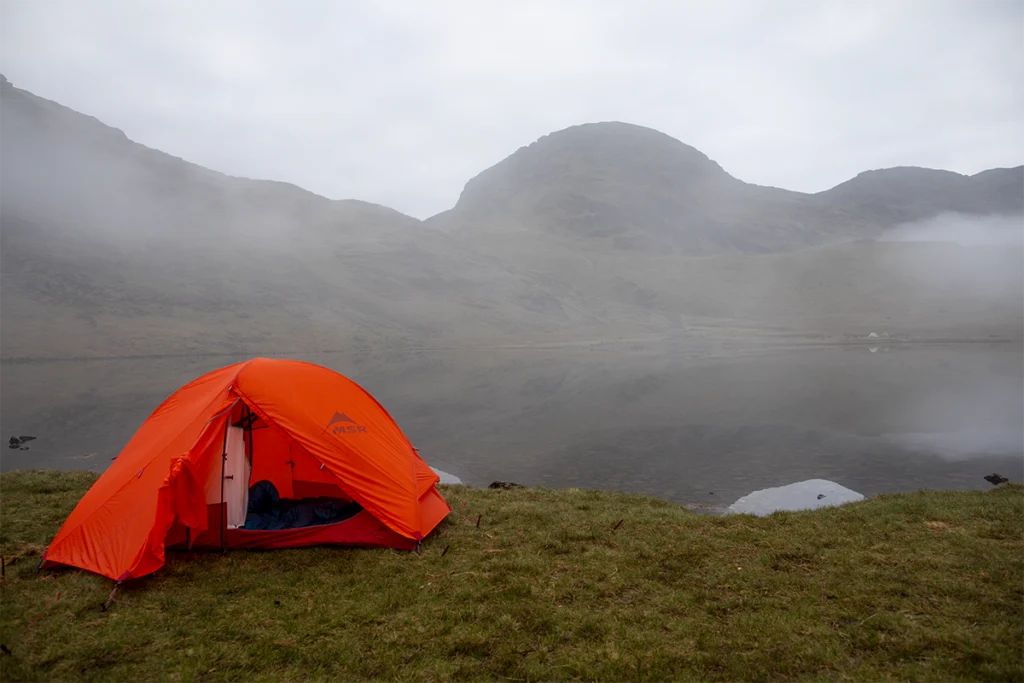
- What season is it? In summer you might be fine with 10 kg. In winter you might need 20 kg, with a second set of clothes, thick socks, a thicker sleeping bag and a stronger tent. My 3-season vs 4-season gear guide explains the difference.
- What will the weather do? Rain, a clear warm night or a cold one? Once you’re up there, you’re up there.
- How big is your rucksack? Buy an enormous pack and you’ll fill it. Buy one too small and the things you need won’t fit.
Learn from my mistake. On my first snow camp I carried 28 kg, including a drone and a load of cans. The wind was blasting, I was absolutely exhausted, and my legs seized up for four days afterwards. I thought I could do more than I could. The cans did not make it any lighter, oddly.
Tip 8: Plan your day
- Check the traffic. I always put Google Maps on, even when I know the way. The A66 to the Lakes is a nightmare for accidents, and two extra hours in the car can mean pitching in the dark.
- Give yourself more time than you think. You’ll walk slower with a heavy pack. If it’s a three-hour drive and a two-hour walk, I allow seven hours.
- Park safely. Check where you’re parking on Google Maps. Leave a note in the windscreen saying you’re a landscape or wildlife photographer and when you’ll be back, so nobody thinks the car is abandoned. Remove valuables and leave the glove box open and empty.
- Plan food. Tea, supper and breakfast, plus snacks. Keep nibbling as you walk so your blood sugar doesn’t drop.
- Know your water. In the Peak District I carry two litres. In the Dales I know where the water sources are, so I carry two small bottles and fill up as I go with my Sawyer Mini.
Plan for wind and rain
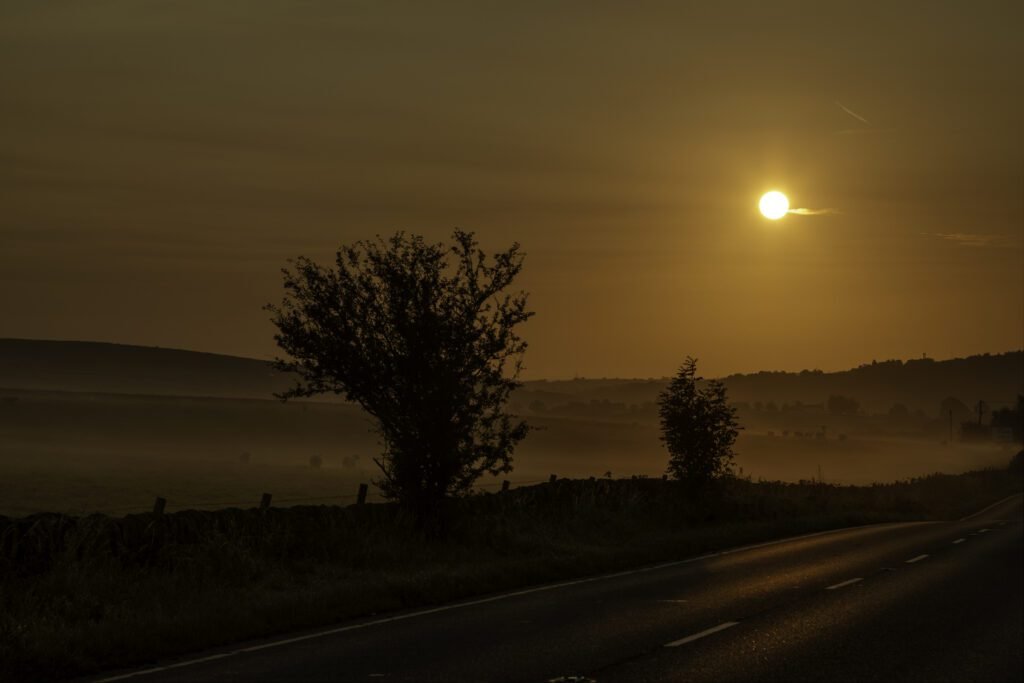
Wind can blow you off your feet on the mountains, and if it’s battering your tent all night you won’t sleep. Rain can spoil a good day too, especially for photography. When I started, I picked clear summer nights when I knew the temperature and the wind would be fine. Do the same for your first camp.
Start small
Practise in your garden first. Set everything up, sleep out, and if something’s wrong it’s easy to go back inside. You’ll get used to the sounds at night, which are different everywhere you go.
Then pick an easy first spot close to the car, like Winnats Pass in the Peak District.
Go with someone experienced
My final tip: if you know someone who’s experienced at wild camping, ask them to take you. Or join a Facebook group, get to know people first and build up a friendship. Then ask if you can come along next time. They’ll look after you and take you somewhere quiet, not miles from the car, to get a taste for it.
Finding a wild camping spot: FAQ
How do I find wild camping spots in the UK?
Scout local areas on foot, follow YouTubers who camp where you want to go, use guidebooks and walking apps, and check the ground on an OS map and Google Earth before you go.
What should I look for in a wild camping spot?
Flat ground, shelter from the wind, a water source nearby, and somewhere high and away from roads and houses.
How much should my pack weigh for wild camping?
Around 10 kg can be enough in summer. Winter kit can push it towards 20 kg. Start light: I once carried 28 kg on a snow camp and my legs seized up for four days.
Do I need a map and compass if I have my phone?
Yes. Your phone needs signal and battery. A map and compass don’t, and knowing how to use them can get you off a mountain when the weather turns.
Where should I go for my first wild camp?
Somewhere easy and close to the car, on a calm, dry night. Winnats Pass in the Peak District is a good example.
Watch the video
Keep reading
 The kit I carry
See what makes the rucksack
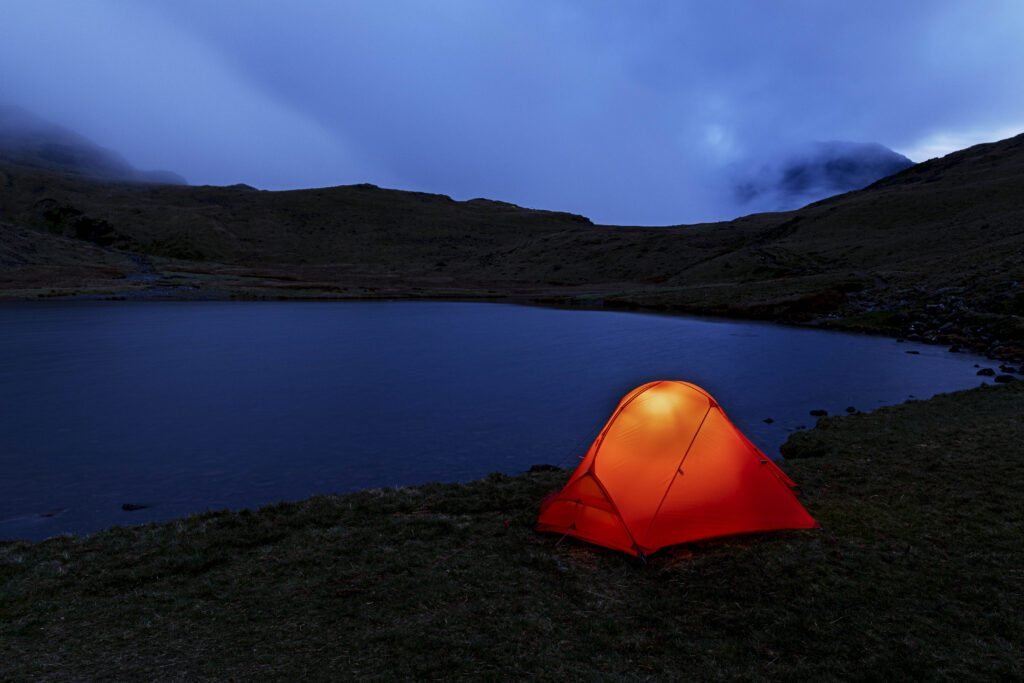
Every tent, sleeping bag, layer and lens I trust, with honest reviews of each.
Planning your first wild camp?
Tell me where you’re heading and I’ll tell you what I’d take.