
Innominate Tarn Wild Camp: A Hidden Gem in the Lake District
The best wild camping spot in England?Last updated: October 2026
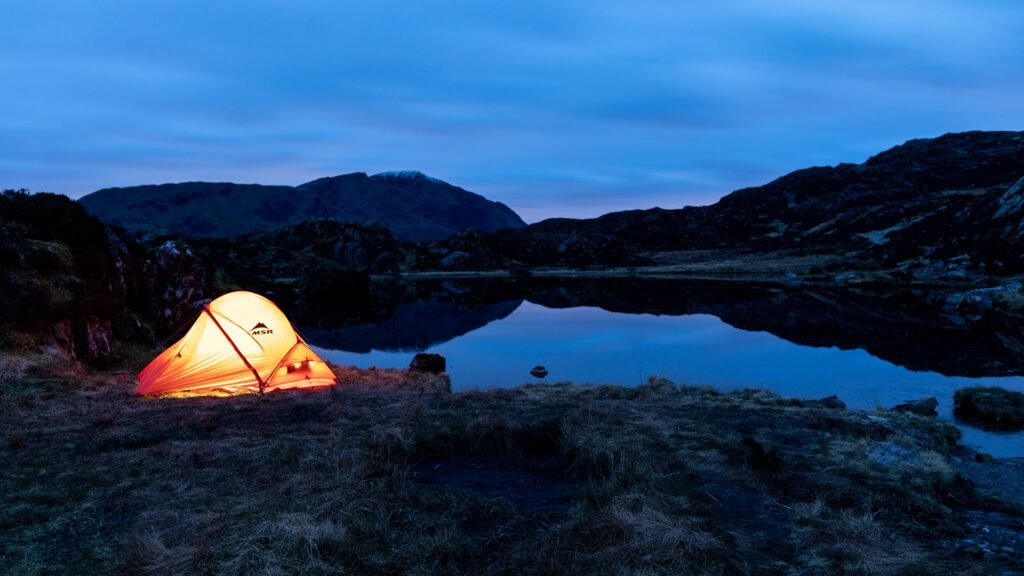
For me, Innominate Tarn is the best wild camping location in England. It sits high on Haystacks above Buttermere, it’s dead calm on a still night, and the reflections are something else. On my last camp I had the whole tarn to myself.
Here’s everything from that trip: the walk in, the night, what I ate, the kit that earned its place and the kit that’s getting left at home next time.
Innominate Tarn wild camp at a glance
| Where | Haystacks, above Buttermere, western Lake District |
|---|---|
| My walk in | About 4 miles, 3 hours with a full pack, taking my time |
| Pitch | Flat, by the water |
| Water | From the tarn, through a filter |
| Crowds | Quiet. I had it to myself |
| Best for | Reflections, timelapse and a peaceful night |
Why Innominate Tarn is so special
Innominate Tarn means “the nameless tarn”. It’s a small, rocky-edged tarn just below the summit of Haystacks, with views across to Great Gable and the high fells. It was Alfred Wainwright’s favourite place, and his ashes were scattered here.
What makes it a hidden gem for wild camping is how quiet it is. If I’d gone over to Seathwaite and up to Styhead Tarn, there’d have been half a dozen tents. Up here, on my own, it was fantastic.
Getting to Innominate Tarn
Innominate Tarn is usually reached from Buttermere, climbing over Scarth Gap onto Haystacks, or from Honister Pass. Either way it’s a proper walk in with a full pack. It took me about three hours to walk four miles, but I wasn’t rushing. I was filming, taking photos and enjoying it.
I left work at five the night before, packed my bag in the morning (the night before would have been sensible), set off after ten, reached the car park around one and was up at the tarn for about five o’clock.
Stay safe: GPS, map and compass
That week there’d been news of a walker and his dog missing in Glencoe. It brings it home what you’re actually doing out here, so you’ve got to check every precaution.
- A GPS watch. I bought a Garmin Instinct 2. On its simple watch face the battery lasts eight to twelve days, and I fully charge it before I leave. It marks where the car is and navigates me back to it.
- Know your coordinates. If I get into trouble and have a bit of signal, I can send my exact position to the people coming to help.
- Map and compass. I still carry both. Technology is an extra layer of security, not a replacement.
The night at the tarn
It was really calm, with a bit of cloud moving through and still snow on the hills, which was superb to see. A storm was forecast for later in the week, so I’d picked my night well.
I shot some timelapses around the tent, then just chilled out and watched a few episodes of Drive to Survive I’d downloaded. I went to bed about nine and slept straight through, which is rare for me. Living the dream.
The only scares came from the tarn itself. In the dead quiet, something kept splashing in and out of the water. It turned out to be ducks, dive-bombing like they were on the top board at the swimming baths. Funny when they’re not scaring you to death. It was so quiet that a couple of dogs barking further down carried straight across the valley.
Condensation? None. I had the vents open at both ends for a bit of airflow, there was very little wind and the pitch was flat. A great night’s sleep.
Food and water
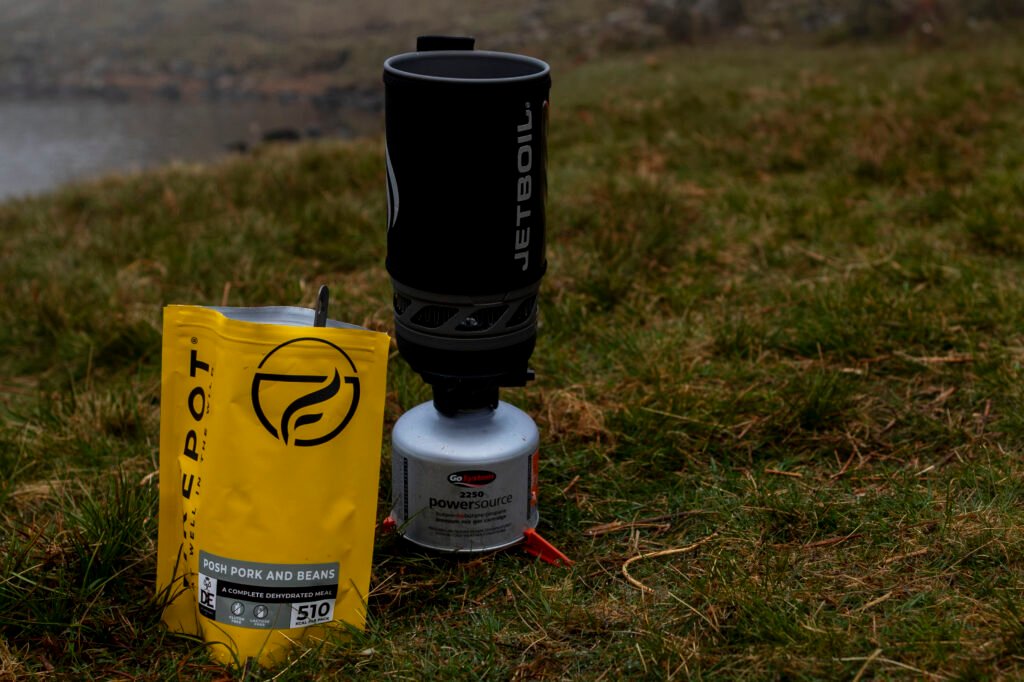
Dinner was a Firepot freeze-dried meal. People moan that they’re expensive, but GO Outdoors often do them on offer, and they’re packed with the fat, carbs and protein you need up here. You need a warm meal.
With a tarn on your doorstep, you don’t have to carry all your water. I filter it through my Sawyer Mini, and with the Jetboil Flash it’s boiled in about 90 seconds.
Wild camping really isn’t that expensive once you’ve got your gear. A bit of petrol and something to eat. Compare that with £30 or £40 at the pub, and the camp wins every time. On cost, anyway. The pub has better chairs.
Kit that earned its place (and kit that’s going)
Flextail: the best bit of kit I’ve got
If you carry an inflatable mat and you haven’t got a Flextail, you must be mad. It blows my bed up, then I use it as a lantern all night.
One tripod, not two
I’d been carrying two tripods. This trip I tested whether a budget carbon fibre tripod (£132 and about 1.3 kg) could do the job on its own, so I only need to carry one. It looked sturdy and the playback was fine.
The Z-Lite is going
The Therm-a-Rest Z-Lite takes up a lot of room, it’s bulky and it isn’t much use. Dropping it and the second tripod should save me about a kilo. It might come back in summer when I can leave some winter gear at home.
The NatureVille portable chair
I was gifted this chair by NatureVille. It’s a little bit heavy and slightly larger than a bottle of wine packed, which is a useful unit of measurement, so if you’re walking miles and miles it might not be for you. But it’s extremely sturdy, it’s rated to 300 lb, and it goes up in two or three seconds.
For landscape photography it’s ideal. When a timelapse can run for hours, you need somewhere to rest your feet while the camera does its thing. It also suits car camping, fishing or festivals.
Winners and losers
Losers: carrying a 3 kg tripod, carrying two tripods, and ducks keeping you up in the middle of the night.
Winners: a budget-friendly carbon fibre tripod, windless nights for easy sleeping, and the toilets at the car park.
Tips for wild camping at Innominate Tarn
- Arrive late, leave early. Pitch in the evening and be packed away in the morning.
- Leave no trace. Take everything home, never light fires, and remember this is Wainwright’s resting place. Treat it with respect.
- Carry a filter. The tarn is your water source, so filter it before drinking.
- Navigate properly. Take a map and compass, and a GPS if you have one. Know where you parked.
- Check the forecast. Haystacks is exposed. A calm night is magical; a storm up here is not.
Wild camping in the Lake District is only legal with the landowner’s permission. In practice it’s widely accepted on the high fells if you camp small, high and discreetly, and leave nothing behind.
Innominate Tarn wild camping FAQ
Can you wild camp at Innominate Tarn?
Many people do. Wild camping in the Lake District needs the landowner’s permission, but it’s widely accepted on the high fells if you arrive late, leave early, keep it small and leave no trace.
How do you get to Innominate Tarn?
Most people walk up from Buttermere over Scarth Gap onto Haystacks, or come in from Honister Pass. It took me about three hours to walk four miles with a full pack, taking my time.
Is there water at Innominate Tarn?
Yes, the tarn itself. Filter it before drinking. I use a Sawyer Mini.
Why is it called Innominate Tarn?
Innominate means “unnamed”, so it’s literally the nameless tarn.
Is Innominate Tarn where Wainwright’s ashes were scattered?
Yes. It was Alfred Wainwright’s favourite place, and his ashes were scattered there.
Watch the video
Keep reading
 The kit I carry
See what makes the rucksack
Every tent, sleeping bag, layer and lens I trust, with honest reviews of each.
Planning a Lake District wild camp?
Tell me where you’re heading and I’ll tell you what I’d take.