
Drax Power Station at Night: Fine Art Long Exposure Photography
The end of coal, in black and whiteAbove: Ferrybridge Power Station, before its cooling towers were demolishedLast updated: October 2026
Drax Power Station, and Yorkshire’s other power stations, look fascinating at night. Working nights, I’d been driving around Selby and Drax for months, and I’d never really been out to photograph them after dark. So I took the camera out on a night photo mission to Drax Power Station.
What came back isn’t a record shot of a power station. It’s a set of black and white fine art long exposures: cooling towers glowing through the trees, steam pouring into the night sky, and light trails on the empty road. Here’s the story behind them, how I shot them, and why these giants matter more now that the age of coal has ended.
Drax Power Station shoot at a glance
| Area | Around Selby and Drax, North Yorkshire |
|---|---|
| Subject | Power stations and industrial sites at night |
| Locations | Four spots, mostly along the same road |
| Lens | 24 mm, cropping in where needed |
| Edit | Black and white |
| Files | Shooting locations and RAW files on my Patreon |
The end of coal-fired power
For 142 years, coal powered Britain. The world’s first coal-fired power station opened in London in 1882, and as recently as 2012 coal still made about 40% of the UK’s electricity. Yorkshire’s Aire Valley, with Ferrybridge, Eggborough and Drax, was the heart of it.
Then it went quickly. Ferrybridge C closed in 2016 and its cooling towers have since come down. Drax, once the biggest coal-fired power station in Western Europe, converted four of its six units to burn biomass during the 2010s and ended coal generation in 2023. On 30 September 2024, Ratcliffe-on-Soar in Nottinghamshire became the last coal-fired power station in Britain to close.
That’s why I wanted to photograph these places now. Drax still steams away, but the coal era it was built for has gone, and towers like these are disappearing from the landscape one demolition at a time.
Talk to the police first
When I arrived there was a bit of protesting going on, and the police were all over. So I had a word with them, explained who I was and what I was doing, and carried on. A man with a tripod in a lay-by at night does take a bit of explaining.
If you’re photographing power stations or any industrial site at night, expect to be asked what you’re doing. Stay on public land and roads, be open about it, and don’t block anything.
Four locations
I shot from four locations, most of them along the same road, moving a little closer each time. I only had my 24 mm with me, so for the closer compositions I’ll need to crop in and take a bit more care with precision.
The exact coordinates for each spot are on my Patreon, so you can stand where I stood.
Ferrybridge: then
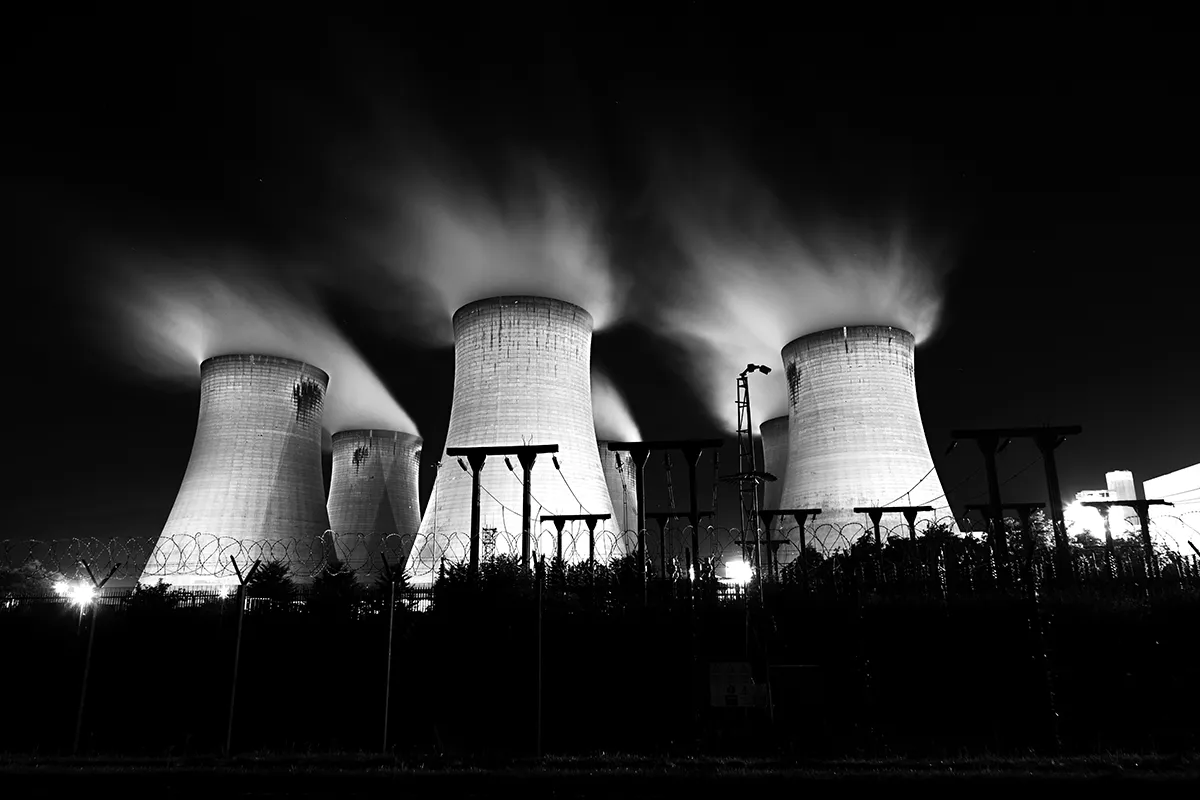
I’ve photographed power stations before. The photo at the top of this page is Ferrybridge from the motorway bridge, with light trails underneath, shot before its cooling towers were demolished.
Drax as fine art photography
Industrial sites at night are all about shape, steam and light. Turning these images into black and white strips out the orange street lighting and leaves the structure: the curve of a cooling tower, the trees framing it, and a long exposure turning the steam into something soft and almost alive.
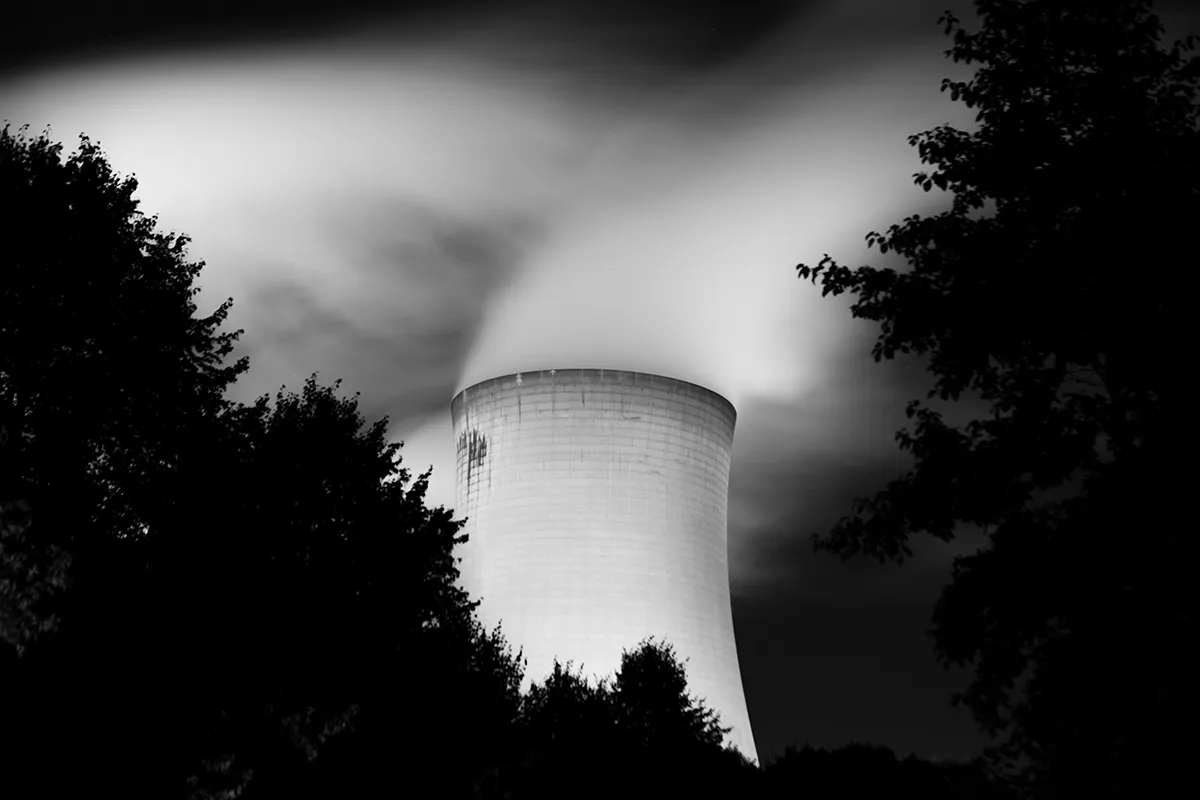
Moving closer, the towers fill the frame and the trees become a silhouette around them. Long exposures smooth the steam into a glowing cloud above each tower.
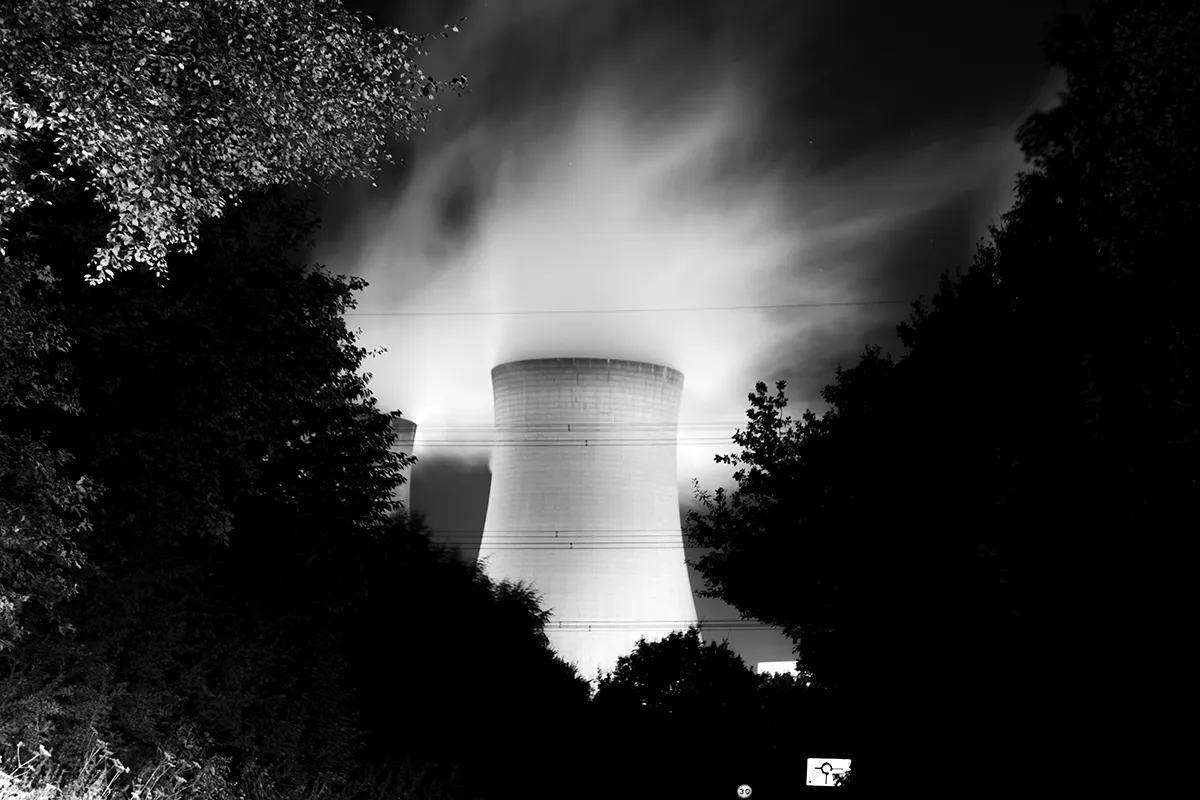
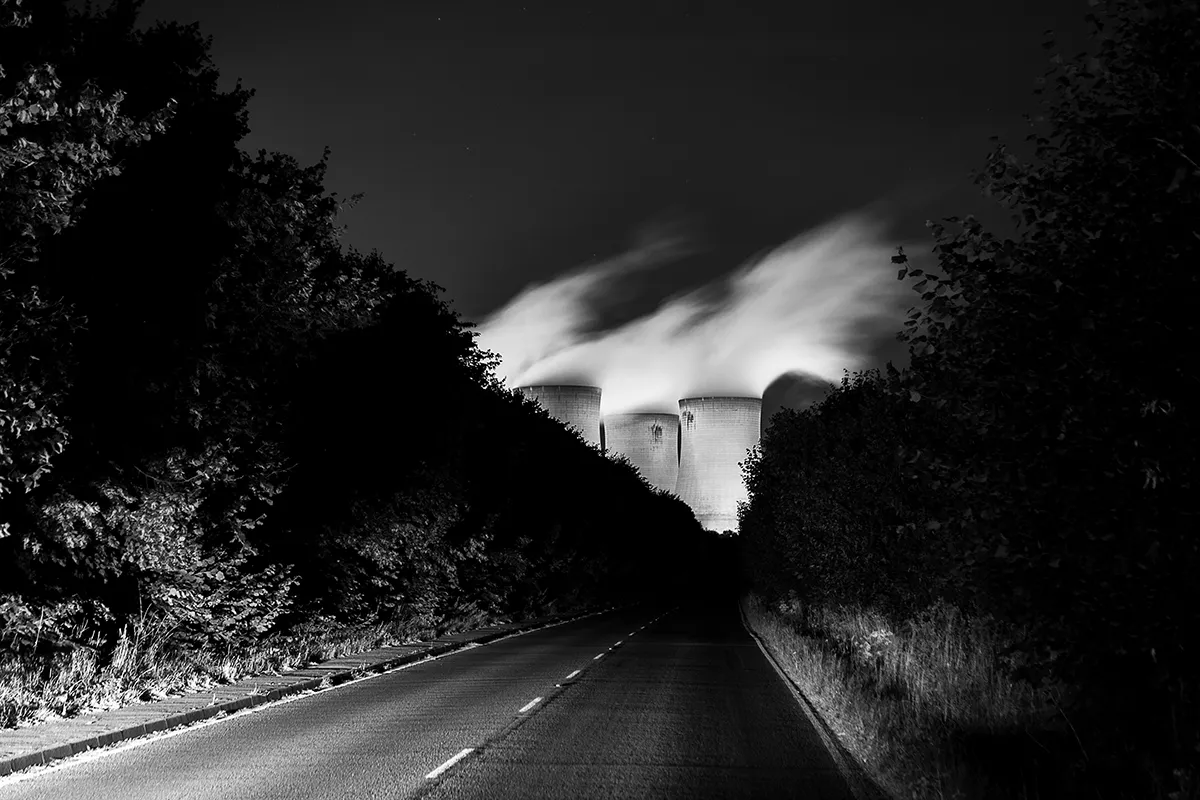
The road gave me light trails, leading lines straight to the towers.
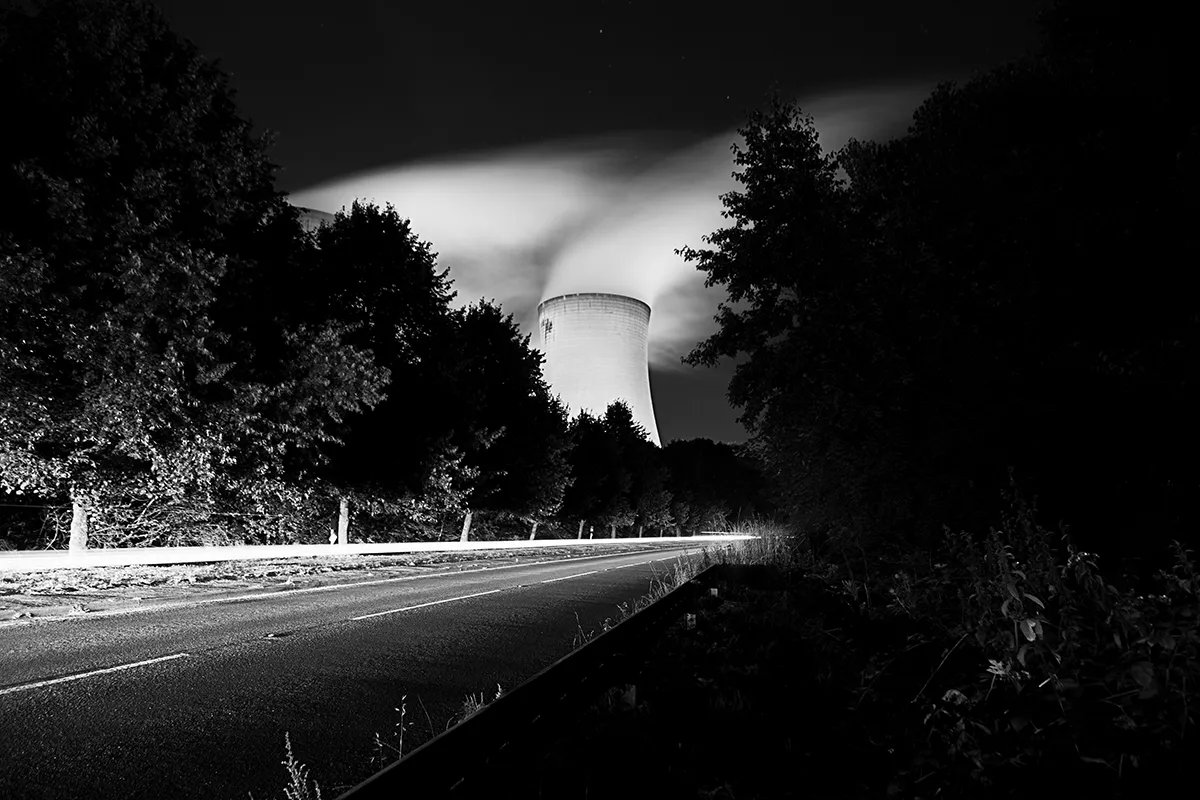
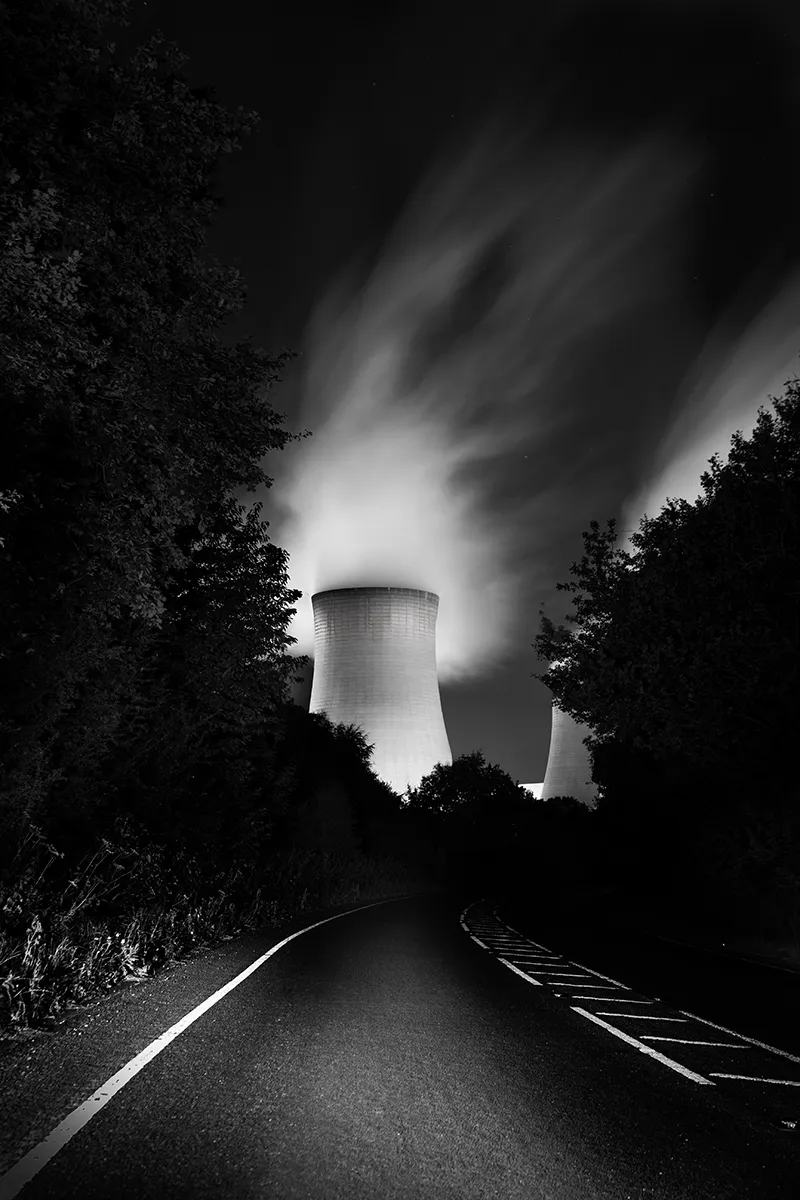
From further back you get the whole row of towers lit up, with the steam merging into one cloud, like the photo near the top of this page. It’s going to be something else as a set. This is a place to come back to, maybe even for a photo book.
Tips for power station photography at night
- Use a sturdy tripod. You’ll be shooting long exposures. My Benro Tortoise does the job.
- Bring a longer lens as well as a wide one, so you’re not cropping heavily.
- Look for movement: steam from the towers and light trails from passing traffic.
- Stay on public land and be ready to explain yourself.
- Try it in black and white.
Power station photography FAQ
Is Drax still a coal power station?
No. Drax converted four of its units to biomass during the 2010s and ended coal-fired generation in 2023. Its cooling towers still steam because the biomass units are still running.
When did the UK stop using coal power?
Britain’s last coal-fired power station, Ratcliffe-on-Soar, closed on 30 September 2024, ending 142 years of coal-fired electricity.
Is Drax good for photography?
Yes, especially at night. The cooling towers and steam make strong long exposures, and black and white turns them into fine art. Shoot from public roads and be ready to explain what you’re doing.
Can you photograph power stations in the UK?
From public land and roads, yes. Expect security or the police to ask what you’re doing, so be open about it. I explained myself to the police and carried on.
What lens is best for power station photography?
Take a wide lens and a longer one. I only had a 24 mm, so I had to crop in for the closer compositions.
Why shoot industrial sites in black and white?
It strips out the orange street lighting and leaves the shapes, steam and light that make these places dramatic.
Keep reading
 The kit I carry
See what makes the rucksack
Every tent, sleeping bag, layer and lens I trust, with honest reviews of each.
Got a photography question?
Tell me what you’re shooting and I’ll tell you what I’d take.